
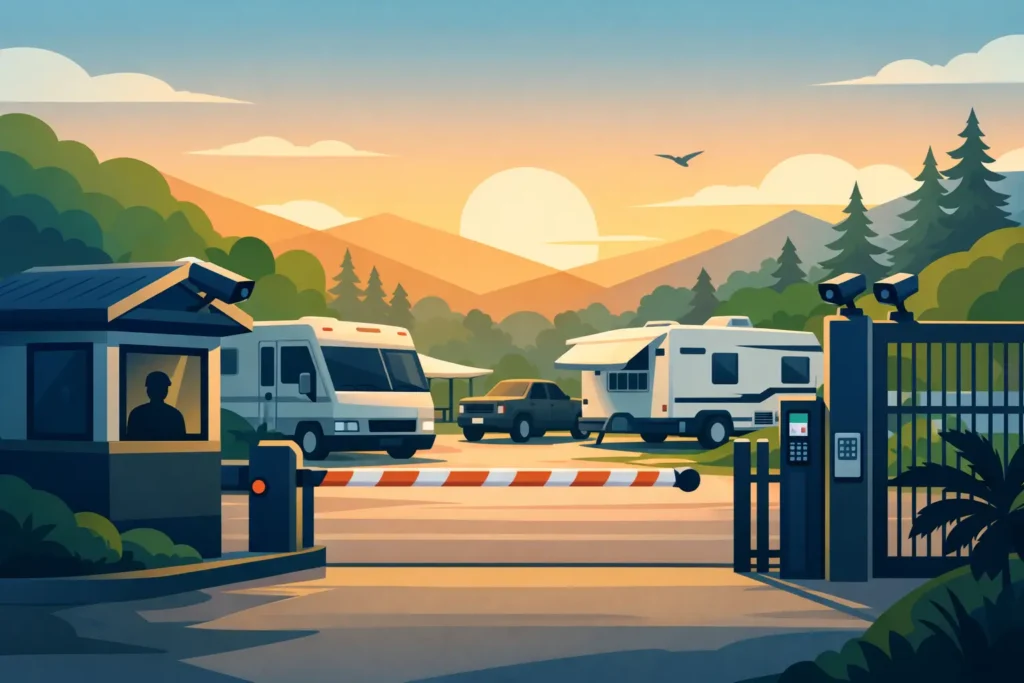
Pulling into an RV park after a long drive, most guests are asking the same quiet question: is a gated RV park safer, or does it just feel that way? The honest answer is that a gate can make a real difference, but it works best as one part of a bigger safety picture. If you are choosing a place for a weekend getaway, a work assignment, or a longer stay, it helps to know what a gate actually does and what else you should look for.
Is a gated RV park safer in real life?
In many cases, yes. A gated RV park is often safer than an open property because it limits casual drive-through traffic and creates a more controlled environment. That matters for guests who want to sleep better, leave for the day without worrying as much, and feel more comfortable letting kids or pets enjoy the park.
But a gate alone is not a magic shield. If a park has poor lighting, unclear management, neglected facilities, or no sense of accountability, the gate does not fix those problems. Safety comes from layers. The gate is one layer. The rest comes from how the property is maintained, who is staying there, and how seriously the park treats guest experience.
What a gate actually helps with
A gated entrance does something simple but valuable. It creates a barrier between the park and random outside traffic. That means fewer people wandering through, fewer unfamiliar vehicles coming and going without a reason, and a better sense of who belongs on the property.
For families, retirees, and long-term guests, that added control can feel especially reassuring. If you are staying for weeks or months, you are not just looking for a place to park. You want a home away from home. A gated setup helps support that feeling because it shows the property is thinking about guest security from the start.
It also tends to reduce nuisance issues. People are less likely to treat the park like a shortcut, a turnaround spot, or an easy place to drift into. That can mean a quieter stay, less disruption at night, and a more relaxed atmosphere overall.
Why some gated parks still do not feel secure
This is where the trade-offs matter. A gate can look impressive from the road, but safety depends on what happens after you enter. If the property feels poorly managed, guests will notice right away.
For example, a gate does not help much if access codes are shared too freely, if broken lights stay broken, or if the grounds are not monitored and maintained. The same goes for parks where rules are unclear or inconsistently enforced. A secure entrance works best when the rest of the park reflects the same level of care.
That is why experienced RV travelers usually judge safety by the full environment, not by a single feature. They notice whether the park is clean, whether common spaces are respected, whether staff seem attentive, and whether the overall setting feels settled and welcoming.
The safety features that matter most beyond the gate
If you are comparing RV parks, think of the gate as the first checkpoint, not the final answer. A safer park usually combines controlled access with strong everyday management.
Lighting is a big one. Well-lit roads, common areas, bathhouses, and entrances help guests feel more comfortable after dark and make the property easier to navigate. Clean restrooms, maintained laundry rooms, and orderly shared spaces also say a lot about how closely the park is looked after.
Fencing adds another layer, especially when paired with gated entry. It helps define the property and makes access more predictable. Site layout matters too. Clearly marked spaces, solid pads, and a well-planned design reduce confusion and create a calmer, more organized setting.
Then there is the human side. A friendly, visible management presence often makes the biggest difference of all. Guests feel safer when they know someone is paying attention, responding to concerns, and setting a respectful tone for the community.
Community matters more than people think
One of the most overlooked parts of RV park safety is the social environment. A park with a good community feel often ends up being a safer place to stay because people look out for their surroundings and for each other.
That does not mean everyone needs to become best friends. It simply means the atmosphere feels neighborly, respectful, and lived-in. When guests know the park values comfort, cleanliness, and courtesy, it tends to shape behavior across the property.
This is especially important for long-term residents and traveling workers. If you are coming back each evening after a full day, you want more than a secure entrance. You want a place that feels stable. You want to recognize the rhythm of the park, trust the environment, and feel like you belong there.
That is often where a well-run gated park stands out. It offers both practical security and peace of mind, which are not always the same thing but often go hand in hand.
Is a gated RV park safer for families and longer stays?
Usually, yes, and for very practical reasons. Parents often appreciate gated access because it helps reduce outside traffic and creates a more defined space for family time. Guests with dogs feel better knowing the property has more controlled entry. Long-term residents tend to value the added consistency and privacy.
For extended stays, small details become big ones. You start to care more about whether the park is quiet at night, whether your site feels comfortable and secure, and whether the amenities are pleasant to use week after week. A gated environment often supports that kind of stay better than a basic roadside lot with constant public traffic.
That said, no RV park can promise zero risk. The smart approach is to choose a park with multiple signs of care, then use common-sense habits during your stay. Lock your RV, keep valuables out of sight, and pay attention to your surroundings just as you would anywhere else.
How to evaluate a park before you book
When you are deciding where to stay, look past the words gated access and ask what kind of experience the property is really offering. A safer RV park usually feels intentional. The grounds are clean. The entrance process makes sense. Amenities are maintained. The park feels welcoming, not chaotic.
Photos can help, but so can the details in how a park presents itself. If the property highlights secure access, full-service amenities, and a comfortable community atmosphere, that is a good sign. If it also offers features that support everyday living, like laundry, showers, reliable hookups, Wi-Fi, pet-friendly spaces, and room to relax, it is often built for a more stable guest experience.
For travelers in North Texas, that combination can be especially valuable. Whether you are staying near work, visiting family, or planning a longer stop outside the busier city pace, a park that balances convenience, comfort, and security gives you a much better chance of enjoying your stay.
What safer really means for RV guests
Safety is not only about preventing the worst-case scenario. It is also about how a place lets you feel once you arrive. Can you settle in? Can you head out for dinner or work without second-guessing everything? Can you walk the property in the evening and feel at ease?
That is why gated access matters. Not because it solves everything, but because it contributes to a setting that feels more protected, more private, and more thoughtfully managed. When it is paired with fencing, clean amenities, attentive staff, and a welcoming atmosphere, it becomes part of something bigger.
At a park like Holiday Road RV Park, that approach is what turns a stop into a stay people actually enjoy. Guests are not only looking for hookups and a place to park. They are looking for comfort, calm, and the kind of environment where they can relax and recharge.
If you are asking whether a gated RV park is safer, the best answer is this: it often is, especially when the gate is backed by good management, strong amenities, and a community-minded setting. The safest choice is usually the park that makes you feel cared for from the moment you arrive, and that feeling is worth paying attention to.