

Pulling into an RV park after a long drive, the last thing most travelers want is confusion at check-in. Yet one of the most common questions guests ask is about full hookups vs partial hookups – and the answer can make a big difference in comfort, convenience, and how relaxed your stay feels from day one.
If you are new to RV travel, the terms can sound more technical than they really are. In simple terms, hookups are the utility connections available at your site. They usually include water, electricity, and sewer. The more services connected directly at your site, the less time you spend managing tanks, monitoring usage, or planning around campground limitations. That is why understanding your options matters, especially if you are booking more than a quick overnight stay.
What full hookups vs partial hookups really means
When people compare full hookups vs partial hookups, they are really comparing how self-contained they need their stay to be.
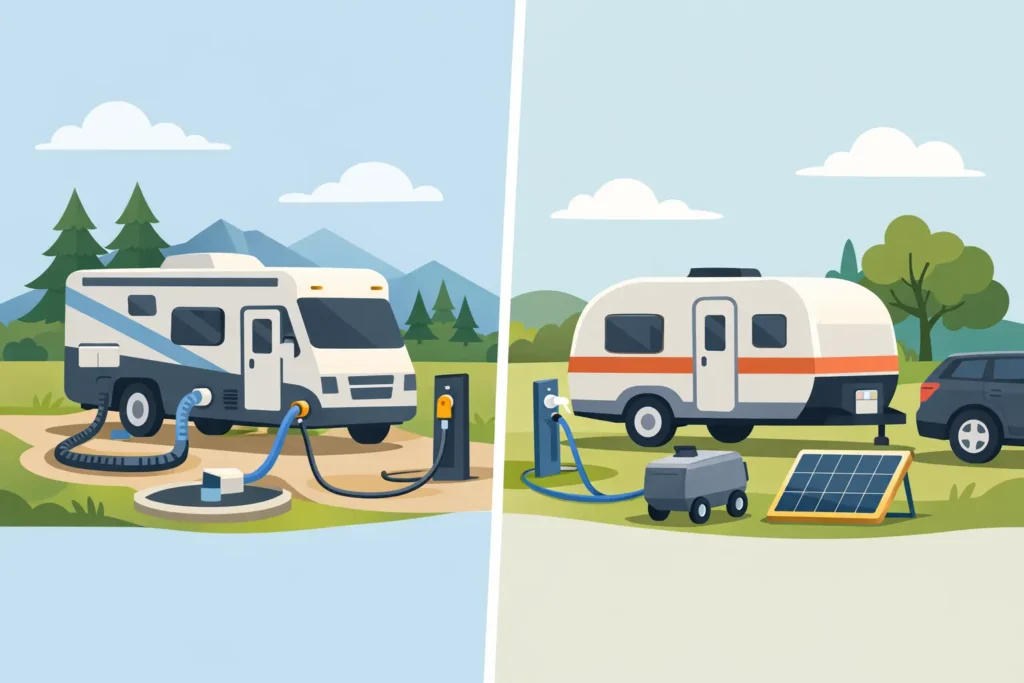
A full hookup site typically includes water, electric, and sewer right at the pad. That means you can plug in, connect your freshwater hose, and hook your RV directly to the sewer system. For many travelers, that setup feels easiest because daily living is simpler. You can shower, wash dishes, flush normally, and settle in without worrying as much about tank capacity.
A partial hookup site includes only some of those utilities. Most often, that means water and electric, or sometimes electric only. Without a sewer connection at the site, you will need to monitor your gray and black tanks and empty them later at a dump station if the park provides one. That does not make partial hookups bad. It just means the experience requires a little more planning and a little less convenience.
For a weekend trip, some guests are perfectly happy with partial hookups. For a longer stay, many quickly realize how valuable a full-service setup can be.
Why the difference matters more than people expect
On paper, the gap between these options can seem small. In practice, it changes the rhythm of your stay.
With full hookups, your RV feels more like a true home away from home. You are not constantly thinking about how full the tanks are or whether today is the day to head to the dump station. That peace of mind matters for families, long-term guests, traveling workers, and retirees who want comfort without extra hassle.
Partial hookups can still work well, but they ask more from you. You may need to limit long showers, keep a closer eye on tank levels, and build a routine around waste disposal. Some experienced RVers do not mind that at all. Others find it turns a relaxing stay into one more thing to manage.
That is the real trade-off. Full hookups usually cost more, but they often save time, effort, and stress. Partial hookups may be more budget-friendly, but they work best when your trip is shorter or you are comfortable living more conservatively.
Who should choose full hookup sites
Full hookup sites are usually the better fit for guests who want comfort to come easy. If you are staying more than a couple of nights, the convenience adds up quickly.
Families often prefer full hookups because kids do not always travel lightly. More showers, more dishes, and more day-to-day use can fill tanks faster than expected. Having sewer right at the site removes a lot of pressure and helps everyone settle in comfortably.
Long-term guests and traveling workers also benefit from full hookups. When your RV is serving as your primary living space, reliable utilities are not a luxury. They are part of what makes the stay practical. You can focus on work, rest, or enjoying the area instead of handling campsite logistics every few days.
Retirees and leisure travelers often choose full hookups for the same reason. It keeps the trip easy. If the goal is to relax, recharge, and enjoy the journey, a fully connected site supports that experience better.
When partial hookups make sense
Partial hookups still have their place, and for some travelers, they are exactly the right choice.
If you are stopping for a night or two, you may not need a sewer connection at all. Many RVers can comfortably rely on their tanks for a short stay, especially if they arrived with empty tanks and manage water use carefully. In that situation, a partial hookup site can be a smart way to save money.
Partial hookups can also work well for more seasoned RV owners who are used to conserving water and planning ahead. If you know your rig, understand your tank sizes, and do not mind using a dump station later, the setup may feel completely manageable.
There is also a style preference at play. Some RV travelers enjoy a more self-sufficient approach and do not need every convenience at their fingertips. For them, partial hookups may feel like a fair compromise between comfort and cost.
Still, it helps to be honest about your travel style. If you prefer easy routines, longer showers, on-site laundry days, and less monitoring, partial hookups can feel limiting sooner than you think.
Full hookups vs partial hookups for short-term and long-term stays
Length of stay is one of the best ways to decide between full hookups vs partial hookups.
For short-term stays, partial hookups can be enough if your tanks are in good shape and your daily needs are light. A quick overnight, a weekend stop, or a brief road-trip break may not require much more than water and electric.
For stays that stretch into a week, a few weeks, or longer, full hookups become much more valuable. Routine tasks feel easier. You do not have to interrupt your schedule to dump tanks. You can enjoy your RV as it was meant to be used, without constantly calculating capacity.
That difference becomes even more noticeable for guests working in the area, relocating, traveling with pets, or staying with family. The longer you stay, the more full hookups support a comfortable lifestyle rather than just a place to park.
Questions to ask before you book
Not every park uses the same wording, so it is always worth confirming exactly what is included. One park’s partial hookup may mean water and 30-amp electric, while another might offer electric only. Before reserving, ask whether the site includes sewer, what type of electric service is available, and whether there is easy access to a dump station if needed.
It also helps to think about your own routine. How many people are in your RV? How long are you staying? Are you traveling with children or pets? Will you be working remotely and relying on a comfortable daily setup? Those answers matter just as much as the price.
A lower nightly rate is not always the better value if it creates extra work or cuts into your comfort. On the other hand, if your trip is simple and short, partial hookups may be all you need.
Choosing the stay that feels easiest
The best RV parks do more than provide utility access. They create a place where you can settle in, feel secure, and enjoy your time instead of troubleshooting it. That is especially true if you are staying in North Texas for more than a quick pass-through.
For guests who want gated access, dependable amenities, clean facilities, and a stay that feels welcoming from the moment they arrive, full hookups often fit the experience better. At a place like Holiday Road RV Park, that extra convenience supports the bigger goal – giving travelers, families, and extended-stay guests a comfortable place to relax and recharge near Caddo Mills, Greenville, and Dallas.
If you are deciding between the two, think less about campground jargon and more about how you want your trip to feel. If you want simple, comfortable, and ready for everyday living, full hookups are usually worth it. If your stay is brief and you do not mind a little extra management, partial hookups can do the job just fine.
The right choice is the one that lets you enjoy the road without turning your campsite into another task list.