
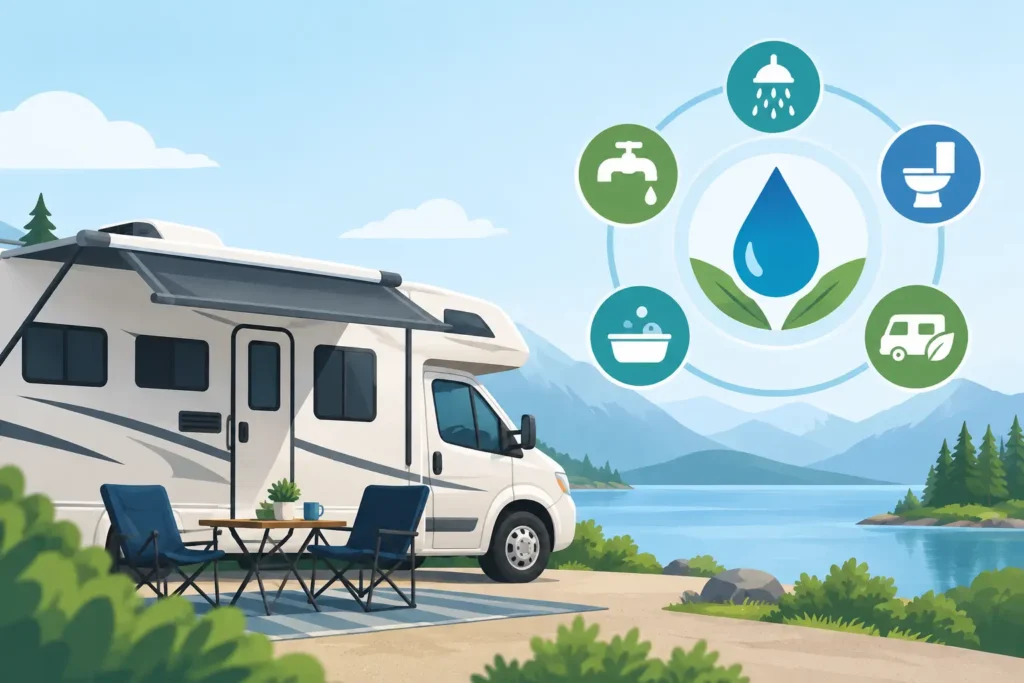
A long shower after a day on the road feels like a small luxury, until the fresh tank gauge drops faster than expected. Learning how to conserve RV water is not about making your trip feel restrictive. It is about using a few smart routines so your family can stay comfortable, your tanks last longer, and you are ready for wherever the road leads next.
Water conservation matters most when you are boondocking or staying at a site with limited hookups, but it is a worthwhile habit at every campground. Even at a full-hookup RV park, mindful water use can reduce strain on your RV plumbing, keep your tanks from filling unnecessarily, and make the transition to a more remote stop much easier.
Start With Your RV Water Setup
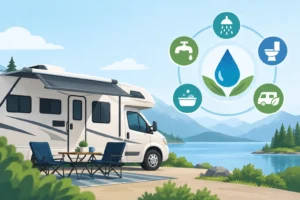
Before changing daily habits, get familiar with the three systems that affect your water supply: the fresh water tank, gray tank, and black tank. Fresh water is what you use for drinking, cooking, washing, and flushing. Gray water comes from sinks and showers, while black water comes from the toilet.
Check your tank levels before setting out and again after your first day or two. This gives you a realistic picture of how quickly your household uses water. Tank sensors are not always perfectly accurate, especially in a black tank, so treat them as a helpful guide rather than the final word.
A small leak can quietly waste a surprising amount of water. Check under sinks, around the toilet, near the water heater, and around the exterior connections. If your water pump cycles when no faucet is running, investigate right away. It may be a loose fitting, a dripping faucet, or a worn seal that needs attention.
It also helps to travel with drinking water in reusable bottles or a separate dispenser. That does not reduce total use by itself, but it keeps your fresh tank supply organized and makes it easier to track what is being used for drinking versus washing.
How to Conserve RV Water in the Shower
Showers are often the biggest daily water expense in an RV. The good news is that a comfortable shower does not need to be a long one. The classic RV shower method works because it keeps the water running only when it is doing a job.
Turn on the water briefly to get wet, turn it off while you soap up and shampoo, then turn it back on to rinse. This approach can use only a fraction of the water of a continuous shower. If your showerhead has a pause button, use it. If it does not, replacing it with a low-flow RV-friendly showerhead can make a noticeable difference.
Consider the needs of your group, too. Two adults taking quick showers each day may use less water than a family with young children who need help bathing. On longer stays without hookups, alternate shower days when practical, use campground shower facilities if available, or choose a quick wipe-down between full showers.
Do not forget the hot-water factor. Waiting for hot water to arrive wastes both water and tank capacity. Catch that initial cool water in a pitcher or basin and use it later for flushing the toilet or rinsing muddy shoes. Never use collected gray water for drinking, cooking, or personal hygiene.
Make Kitchen Water Go Further
The kitchen is another place where small adjustments add up quickly. Rather than letting the faucet run while washing dishes, fill one small basin with warm soapy water and another with a limited amount of rinse water. Wash several items at once, beginning with the cleanest items, such as cups and utensils, before moving to pots and pans.
Wipe plates, cookware, and counters with a paper towel or reusable cloth before washing them. Removing food scraps and grease first means you need less water and helps protect the gray tank from odors. Put food waste in the trash instead of rinsing it down the drain.
Plan meals that create fewer dishes when you are relying on your fresh tank. One-pan dinners, grilled meals, and simple breakfasts are road-trip favorites for a reason. This does not mean every meal must be basic. It simply means saving the multi-pot recipes for a stay with reliable hookups and plenty of time to relax.
Produce can be washed in a bowl instead of under running water. If the wash water is clean and free of soap, it can be repurposed for a toilet flush. Be thoughtful about any local campground rules, and never dump wash water on the ground unless a campground specifically permits it.
Use the Toilet Wisely, Not Sparingly
There is no need to avoid flushing when it is needed. Your RV toilet and black tank work best with enough water to move waste through the system. The goal is not to use the absolute minimum every time. The goal is to avoid unnecessary full flushes while still preventing clogs and buildup.
Use the toilet’s quick flush for liquid waste when appropriate, and use more water for solid waste. A dry black tank can create far more trouble than a slightly fuller one. If you are parked at a full-hookup site for several days, do not leave the black tank valve open continuously. Allowing liquid to drain away while solids remain can create a stubborn pile inside the tank.
Household toilet paper can also affect tank performance. Choose RV-safe toilet paper that breaks down easily, use only what you need, and avoid flushing wipes, paper towels, or hygiene products. Even products labeled flushable do not belong in an RV black tank.
Rethink Laundry and Daily Cleanup
Laundry can use a lot of water, especially in a compact RV washer. Wait until you have a full load, choose the appropriate water level, and avoid washing lightly worn clothing out of habit. Hanging towels to dry and reusing them for a few days can make a meaningful difference for couples and families.
For travelers staying at a park with on-site laundry facilities, using those amenities may preserve your onboard water and tank capacity for daily living. It is one of those simple comforts that makes an extended stay feel more like home.
The same principle applies to cleaning. Sweep floors regularly so you do not need to mop as often. Use a spray bottle and microfiber cloth for counters and surfaces instead of soaking a rag under the faucet. When pets come in with muddy paws, keep a towel by the door and wipe them down before they track dirt through the RV.
Choose Water-Saving Gear That Fits Your Travel Style
You do not need to fill every cabinet with gadgets to conserve water. A few practical items can make routines easier: a low-flow showerhead, faucet aerators, a small wash basin, a spray bottle, and reusable microfiber cloths. These tools are affordable, easy to store, and useful whether you travel for weekends or live in your RV for months.
For extended stays, a water pressure regulator is also a smart protective measure when connecting to a campground water supply. It helps protect your RV plumbing from excessive incoming pressure. A clean drinking-water hose and a quality filter can also support better-tasting water, which may encourage everyone to use refillable bottles instead of buying single-use beverages.
The right setup depends on your travel plans. A family boondocking for several days will prioritize tank capacity and shower habits. A traveling worker on a monthly site may focus more on preventing leaks, managing laundry, and maintaining a clean, comfortable living space.
Enjoy Comfort While Building Better Habits
Conserving water should support the freedom of RV travel, not take away from it. At a welcoming destination with full hookups, clean restrooms, showers, and on-site laundry, you can relax and recharge without putting every drop on a strict budget. Holiday Road RV Park offers the kind of comfortable North Texas stay that makes it easier to care for your RV while enjoying time with family, neighbors, and the outdoors.
Still, the best habits travel with you. Take shorter showers, wash dishes in a basin, fix leaks quickly, and use enough water to keep your tanks functioning properly. With a little awareness, you can stretch your supply, protect your RV systems, and spend more of your trip enjoying the place you came to see.